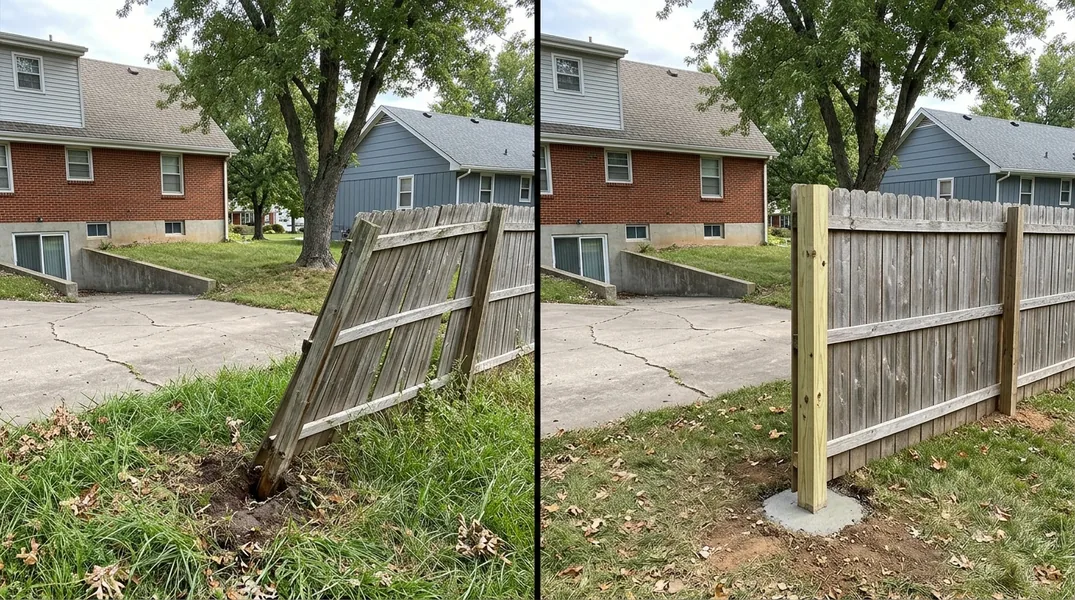
The Kansas City Climate Challenge: Why Your Fence Leans
If you've noticed your fence leaning to one side or looking unstable, you're not alone. Many homeowners throughout Kansas City experience this frustrating problem, especially after winter. The culprit isn't always poor installation or neglect. Instead, the unique soil composition and seasonal weather patterns in the Midwest create perfect conditions for fence failure.
Kansas City sits atop expansive clay soil, which is notorious for causing structural problems. This clay expands when wet and contracts when dry, creating constant pressure on fence posts. Combined with the region's freeze-thaw cycles, your fence posts face relentless stress year-round. Understanding these natural forces is the first step toward protecting your investment and knowing when professional Wood & Privacy Fence Installation expertise becomes essential.
Expansive Clay: The Hidden Enemy Beneath Your Fence
Expansive clay is a common soil type throughout the Midwest, and it behaves very differently from other soils. When moisture increases, the clay particles absorb water and expand, sometimes increasing in volume by 10 percent or more. This expansion pushes upward and sideways with tremendous force, affecting anything built on or in the ground. Fence posts are particularly vulnerable because they're partially buried in this unstable soil, and the pressure acts directly against the post itself.
As seasons change and moisture levels fluctuate, the clay goes through repeated cycles of expansion and contraction. In spring and after heavy rains, the clay swells and pushes posts out of plumb (vertical alignment). During dry summer months, the clay shrinks, leaving gaps around the post and reducing lateral support. This constant movement weakens the post's foundation and gradually pushes the entire fence structure off-center. Over several years, a fence that starts nearly straight can develop a noticeable lean that affects both appearance and structural integrity. If you're seeing this problem, contact Kansas City Fencing for a free estimate to assess the damage.
Frost Heave and Winter Damage: Why Fences Lean After Winter
Frost heave is another major culprit behind leaning fences, and it's especially problematic in Kansas City winters. When soil freezes, water in the earth turns to ice, and ice expands. This expansion can literally lift fence posts upward by several inches, pushing them out of their original position. Once spring arrives and the soil thaws, the post may not settle back to its original location. Instead, it shifts sideways or remains elevated, creating a permanent lean or gap at the base.
The problem is compounded when posts are set too shallow. Building codes recommend setting fence posts at least one-third of their length into the ground, with a minimum depth of 24 to 30 inches in most climates. In Kansas City, where frost can penetrate 30 to 36 inches deep, posts set at minimum depth are especially vulnerable to heave. Each winter cycle subjects the fence to stress, and over time, the cumulative effect becomes visible. Homeowners often notice their fence leaning after winter more than at any other time of year, which is a direct result of frost heave pushing posts out of alignment during the coldest months.
Rotted Posts: When Wood Fails from the Ground Up
Even if expansive clay and frost heave don't push your fence over, rotted posts can cause it to lean or collapse entirely. Wood fence posts are constantly exposed to moisture, especially at ground level where soil stays damp. This moisture, combined with temperature fluctuations and contact with soil chemicals, accelerates wood decay. Rot typically begins at the base of the post, where it contacts the earth, and spreads upward over time.
A rotted post loses structural strength gradually. At first, the decay is invisible, hidden beneath the surface. By the time you notice a lean or soft spot in the wood, the damage is often extensive. Rotted wood cannot support the weight and lateral forces that a fence experiences, especially during wind or when frost heave pushes on it. The post becomes weak and flexible rather than rigid, allowing the entire fence section to shift out of plumb. The only reliable solution is Wood & Privacy Fence Installation repair that includes post replacement. Waiting too long can result in the fence falling completely, creating a safety hazard and a more expensive repair job.
Leaning Fence Repair and Fence Post Replacement Near Me: When to Call a Professional
If your fence is leaning, the first question is whether it can be repaired or whether posts need replacement. A slight lean caused by recent frost heave might be corrected by resetting the post deeper and adding concrete reinforcement. However, if the post is rotted, cracked, or has been leaning for years, replacement is the only permanent solution. Attempting to straighten a fence without addressing the underlying cause is temporary at best. The same forces that caused the lean will continue working, and the problem will return.
Professional fence contractors have the tools, knowledge, and experience to diagnose the real cause of your leaning fence and recommend the right fix. They can assess soil conditions, evaluate post damage, and determine whether repair or replacement is appropriate. If you're in the Kansas City area and need leaning fence repair or fence post replacement, Kansas City Fencing can help. Call (816) 631-8814 to discuss your fence problem and get expert guidance on the best solution for your property.
Prevention and Long-Term Fence Care in Kansas City
The best defense against leaning fences is proper installation from the start. Posts should be set deep enough to account for Kansas City's frost depth, ideally 30 to 36 inches or deeper for taller fences. Using concrete that extends several inches above ground level helps shed water away from the post base, reducing moisture absorption. Some contractors use gravel or sloped concrete to improve drainage around posts, which slows rot development significantly.
Regular maintenance also extends fence life and catches problems early. Inspect your fence annually, especially after winter, for signs of leaning, rot, or loose posts. Look for soft wood at the base of posts, discoloration, or visible decay. Trim vegetation near fence lines to improve air circulation and reduce moisture retention. If you notice any damage, address it promptly rather than waiting for the problem to worsen. Minor repairs now prevent major replacement costs later. Whether you need routine maintenance, leaning fence repair, or a complete fence replacement, Kansas City Fencing offers comprehensive services to keep your fence straight, strong, and attractive for years to come.
Looking for a professional tree service in Kansas City? Kansas City Fencing responds fast for all your fence needs.
Get a Free Quote