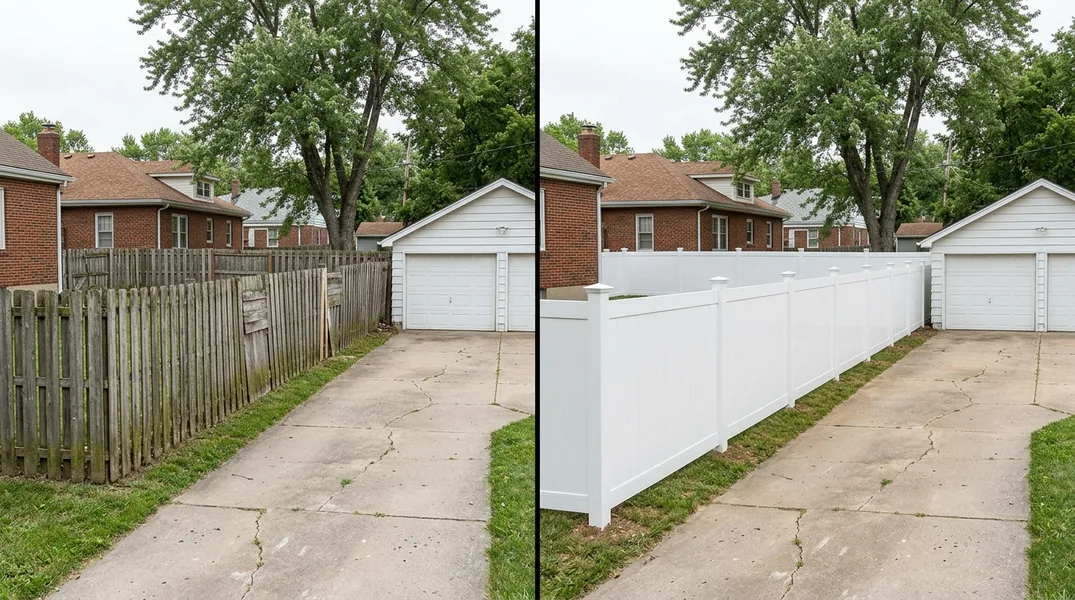
Understanding Kansas City's Winter Climate and Fence Stress
When you're deciding between wood and vinyl for your fence in Kansas City, you need to think beyond the showroom. Our region experiences genuine winter conditions that test fencing materials in ways that milder climates never will. Kansas City winters bring freezing temperatures, fluctuating freeze-thaw cycles, heavy snow loads, and occasional ice storms. These conditions don't just challenge your fence's appearance; they can compromise its structural integrity if you choose the wrong material.
The freeze-thaw cycle is particularly brutal on fencing. Water penetrates wood fibers and vinyl seams, then expands as it freezes. This expansion and contraction happen repeatedly throughout the season, creating stress that weakens joints, causes cracking, and can lead to warping or buckling. Understanding how each material responds to these seasonal pressures is essential before you invest thousands of dollars in a fence that will surround your property for the next decade or more.
How Wood Fences Perform in Kansas City Winters
Wood & Privacy Fence Installation has been a Kansas City tradition for generations, and there's good reason. Wood offers warmth, natural beauty, and a classic aesthetic that complements virtually any home style. However, wood's performance in our winters requires honest assessment. Quality wood fences, when properly installed and maintained, can absolutely survive Kansas City's climate. The key word is maintained. Wood absorbs moisture, which means freeze-thaw cycles will eventually cause checking (small surface cracks), cupping, and in severe cases, rot if water penetrates deep into the grain.
The lifespan of a wood fence in Kansas City typically ranges from 5 to 15 years, depending heavily on the wood species, installation quality, and maintenance routine. Pressure-treated pine is common and affordable but less durable than cedar or composite wood options. Cedar is naturally more rot-resistant and weathers beautifully, but costs significantly more. To maximize longevity, wood fences need annual staining or sealing, regular inspection for damage, and prompt repairs. Many homeowners underestimate the time and expense required for this ongoing maintenance, which can add up to several hundred dollars annually.
Vinyl & PVC Fence Installation: The Low-Maintenance Alternative
Vinyl & PVC Fence Installation has become increasingly popular among Kansas City homeowners specifically because it addresses the maintenance burden of wood. Vinyl is manufactured from PVC plastic, which does not absorb water, does not rot, and does not require staining, sealing, or painting. A simple annual rinse with a garden hose keeps vinyl looking nearly new. For homeowners with busy schedules or those who simply prefer not to spend weekends maintaining their property, vinyl represents genuine convenience.
However, vinyl has its own winter vulnerabilities that Kansas City homeowners should understand. While vinyl doesn't rot or absorb water, it does expand and contract with temperature changes. In extreme cold, vinyl becomes brittle and more susceptible to cracking if struck or stressed. Additionally, vinyl can become discolored by UV exposure and may develop a chalky appearance over time, though this is primarily cosmetic. The initial cost of vinyl installation is typically 20 to 40 percent higher than pressure-treated wood, though the reduced maintenance often justifies the premium investment over the fence's lifetime.
Durability Comparison: Which Material Actually Lasts Longer
When comparing durability in Kansas City's climate, the answer depends partly on how you define durability. A well-maintained wood fence can last 15 years or more, while a vinyl fence typically lasts 20 to 30 years with minimal intervention. However, many wood fences fail earlier due to inadequate maintenance, especially in our region's challenging winters. Vinyl's advantage isn't just longevity; it's predictability. You know what you're getting, and you know the maintenance burden will remain minimal year after year.
Structural integrity is another consideration. Wood fences can develop soft spots where rot has begun, potentially becoming unsafe if children or pets lean against them. Vinyl maintains its structural integrity throughout its lifespan, though it can become loose at posts if installation wasn't done correctly. Both materials can be damaged by severe weather events, but vinyl damage is typically limited to individual panels that can be replaced, while wood damage may require extensive repair work. For Kansas City homeowners who want to set it and forget it, vinyl offers superior durability relative to the effort required.
Wood & Privacy Fence Installation Cost in Kansas City: What to Budget
When evaluating pricing for your fence project, initial installation cost is just one part of the equation. Pressure-treated wood fencing typically costs between $15 and $25 per linear foot installed, making it the most affordable upfront option. Cedar wood runs $25 to $40 per linear foot, while vinyl installation ranges from $30 to $50 per linear foot depending on style and quality. For a typical 150-foot residential fence, you're looking at $2,250 to $3,750 for pressure-treated wood, $3,750 to $6,000 for cedar, or $4,500 to $7,500 for vinyl.
The real cost difference emerges over time. After five years, a wood fence will likely need its first major sealing or staining treatment, costing $500 to $1,500 depending on fence size and condition. Every three to five years thereafter, you'll repeat this process. By year 15, you may have spent an additional $2,000 to $4,500 on maintenance. Vinyl requires virtually no ongoing investment beyond occasional cleaning. Over a 20-year period, the total cost of ownership for vinyl often equals or beats wood, despite the higher initial investment. To understand the specific costs for your property, we recommend getting a free estimate from Kansas City Fencing, where our team can assess your exact needs and provide transparent pricing.
Making Your Decision: Which Material Is Right for Your Kansas City Home
Choosing between wood and vinyl comes down to your priorities, lifestyle, and long-term vision for your property. If you love the natural appearance of wood, enjoy outdoor maintenance projects, or have budget constraints, wood remains a solid choice. Pressure-treated wood offers good value, while cedar provides superior aesthetics and durability for those willing to invest more. Just commit to the maintenance schedule from day one, and your fence will serve you well through Kansas City winters.
If you value convenience, prefer a best low maintenance fence option, and plan to stay in your home for many years, vinyl is the smarter investment. Vinyl's durability, minimal upkeep, and consistent appearance make it ideal for busy homeowners. Both materials can be professionally installed to withstand Kansas City's climate when done right. The difference is what happens after installation ends. Whether you choose wood or vinyl, professional installation matters tremendously. Poor installation creates gaps where water penetrates, weak posts that fail under snow load, and panels that don't align properly. When you're ready to move forward with your fence project, Kansas City Fencing has the expertise to install either material correctly. Call us at (816) 631-8814 or request a free estimate today. We'll help you understand the real-world performance of each option for your specific property and help you choose the fence that will protect and beautify your home for years to come.
Looking for a professional tree service in Kansas City? Kansas City Fencing responds fast for all your fence needs.
Get a Free Quote